The Visitor and the Vessel
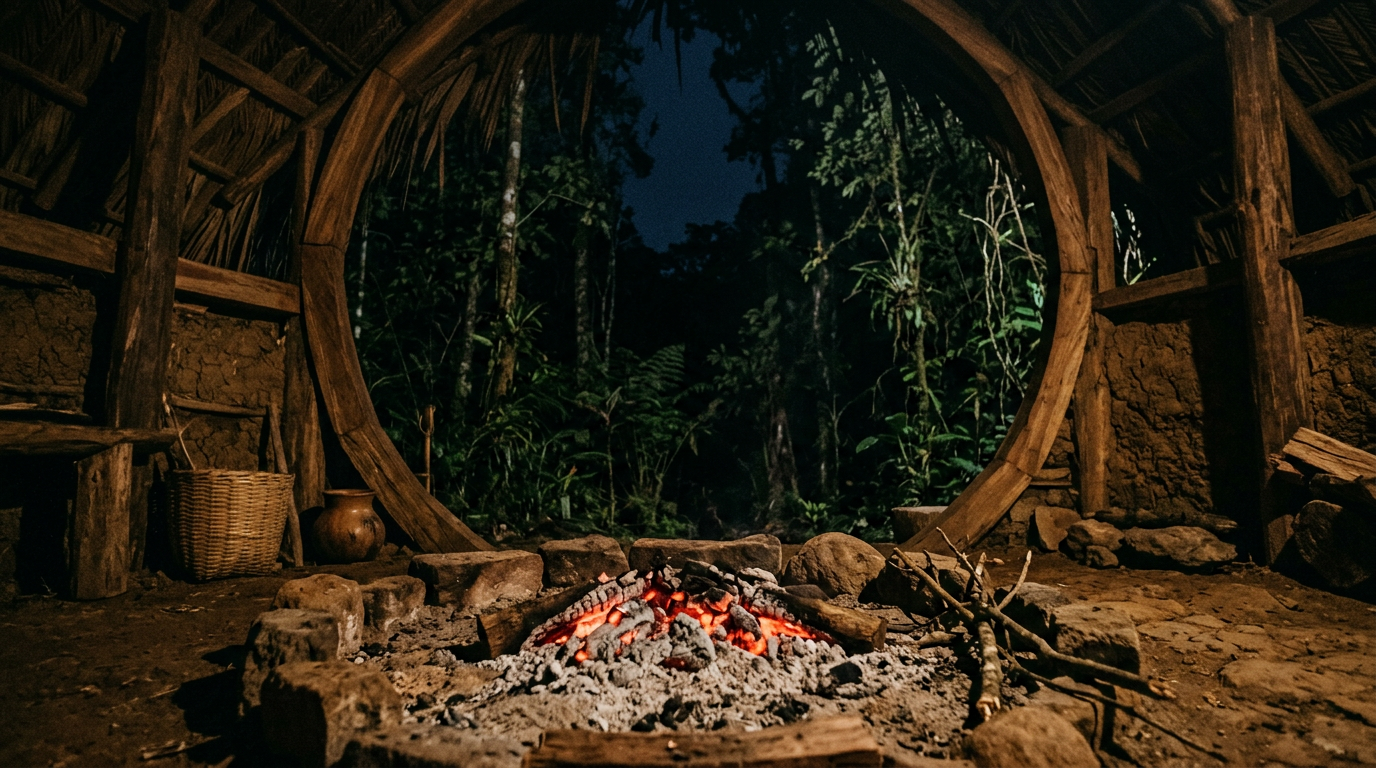
Coals in the maloka
I want to tell you a story my abuelito once told me, late at night in a village tucked deep in the Colombian mountains.
The fire was almost gone, just red coals breathing under a thin layer of ash. Smoke curled up slow and heavy, and the air was thick with the sweet, sharp smell of guayaba leaves we had thrown into the flames. The maloka was quiet. Outside, the selva sang with crickets and cicadas. The river carried its voice through the trees. I was tired from walking all day, but when the old man began to speak, my body forgot its weight. His voice was low and steady, like the earth itself was talking.
He said, “Hermano, listen. A man once came to us from far away. He was not of this place. He came with hunger in his eyes and pride in his chest. He thought he was ready for the fire. Let me tell you what became of him.”
Hunger without a vessel
The visitor arrived with confidence. He had traveled through many countries, carried philosophies in his head, and words from teachers in his mouth. He said he had studied meditation in Asia, read the great thinkers from Europe, and followed guides from the north. His tongue was full of knowledge, but his spirit was empty. He thought himself strong, but he carried no roots.
He came asking for yage, the medicine. He had heard stories of visions, of awakening, of shortcuts to the truth. He believed that drinking would be enough, that the cup itself was the door. He wanted revelation, but not discipline. He wanted collapse, but not the vessel to hold it.
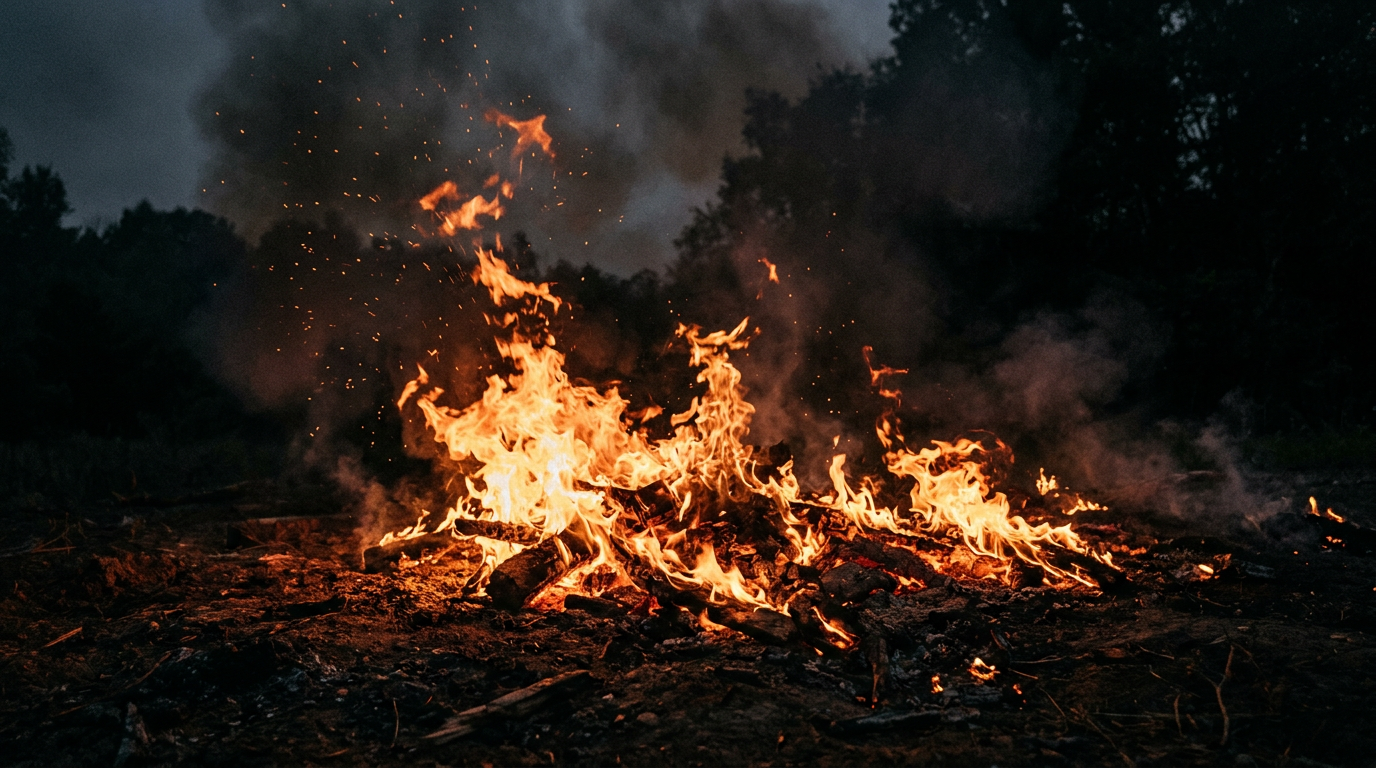
The first flood
That first night, he sat in the maloka with us. The curandero poured the brew, thick and bitter, black as the soil after rain. The visitor lifted it with shaking hands and swallowed it down, his face twisting at the taste. He sat straight, waiting. His mind was restless, already picturing visions he expected to see.
At first, nothing. The fire snapped, the night hummed, the people swayed in silence. Then the medicine struck. It hit his stomach like a storm. His body folded over, his face dropped to the bucket in front of him, and his hands clawed the dirt. His breath came ragged, and then came the purge.
He vomited until his ribs rattled. His body convulsed, sweat soaking through his shirt. His cries tore through the maloka. He shouted for the spirits to stop, for the medicine to release him. But the flood kept coming.
And with it came visions. Not the kind he had dreamed of. Not light, not gods, not paradise. Darkness. Shame rising from the bottom of his chest like smoke from a hidden fire. Old grief he had buried under years of pride. Memories of betrayal, voices of those he had hurt, regrets that had lived under silence. They rushed at him like jaguars in the dark. He tried to push them away, but they circled him, teeth bared.
By dawn he was hollow. His body lay limp, eyes sunken, lips cracked. Yet when the sun broke through the cracks of the maloka and touched his skin, he smiled weakly. He told himself he had been reborn. He said he had “seen God.” He thanked the curandero with shaky hands, left the maloka, and within days boarded a plane back to his home.
For months, he told friends of his “awakening.” But the truth was different. His temper returned. His old addictions pulled at him. His loneliness grew heavier. The vision faded like smoke, leaving only scars. Nothing had changed.
What my abuelito named
My abuelito leaned toward me then, his eyes sharp even in the low light. “Do you see, hermano? The man touched the fire, but he had no vessel. And fire without a vessel only burns.”
Rules, boredom, and the second cup
The visitor returned a year later. This time his bearing had changed: his shoulders bent lower, his edge gone. The arrogance had cracked. He knew now that the brew alone was not enough. He came with less pride, asking to try again.
We told him that if he wanted to drink, he must first prepare. We gave him rules. Eat only plain food, no salt, no sugar, no meat. Abstain from women, from loud speech, from distractions. Rise with the sun. Work with your hands. Walk with the river. Keep silence. Sit with the fire.
He resisted. His face wrinkled in frustration. He thought, “I came for visions, not for diets and chores.” But he obeyed.
Days passed. He ate cassava and fruit, drank only water, and spoke little. His body grew lighter. His tongue lost its sharpness. His mind slowed. His chest loosened. By the time the cup touched his lips again, he was not the same man.
The song as rope
That night the medicine entered him softer, but the storm returned. Shame. Grief. Fear. It rose again, swirling like a black current, threatening to drown him. He felt the panic. His breath quickened. His body shook. He thought he was going to be swallowed again.
Then the curandero began to sing.
The icaro was not pretty, not a melody you could hum in the day. It was sharp, strange, broken. The words seemed older than memory, twisting in the air, moving like smoke in the lungs. The song cut into the darkness. It wrapped around the visitor’s chest, a rope thrown into a flood. He grabbed it. He still shook. He still vomited. He still broke. But he was not lost.
My abuelito’s voice slowed here, almost a whisper. “The song is part of the vessel. It is one of the walls that holds you when the fire rises. Alone, a man is swallowed. With the song, he finds his way through.”

That night the visitor died many deaths. His name dissolved. His story melted. He was no one for hours. He thought he was finished. But at the bottom of that collapse, he felt something new. He felt safe. Light. Relieved. He realized then: collapse without a vessel is trauma. Collapse inside a vessel is rebirth.
Now the work begins
The fire popped, sending sparks into the night. My abuelito leaned back and let the silence hang. The story was not done. The visitor’s collapse was only the beginning. What mattered most was what came after.
The visitor thought it was over when the visions ended. He was exhausted, soaked in sweat, emptied by the purge. He told himself he had survived, that now he could return home with new knowledge. But the villagers shook their heads.
“No,” they said. “Now the work begins.”
The next morning he woke with the sun. His body was sore, his head heavy, but he was told to join the others. He carried water from the quebrada in heavy clay jars. His hands slipped, his arms burned, his back screamed. The people laughed, not cruelly, but with warmth, as if to say, welcome to the real ceremony.
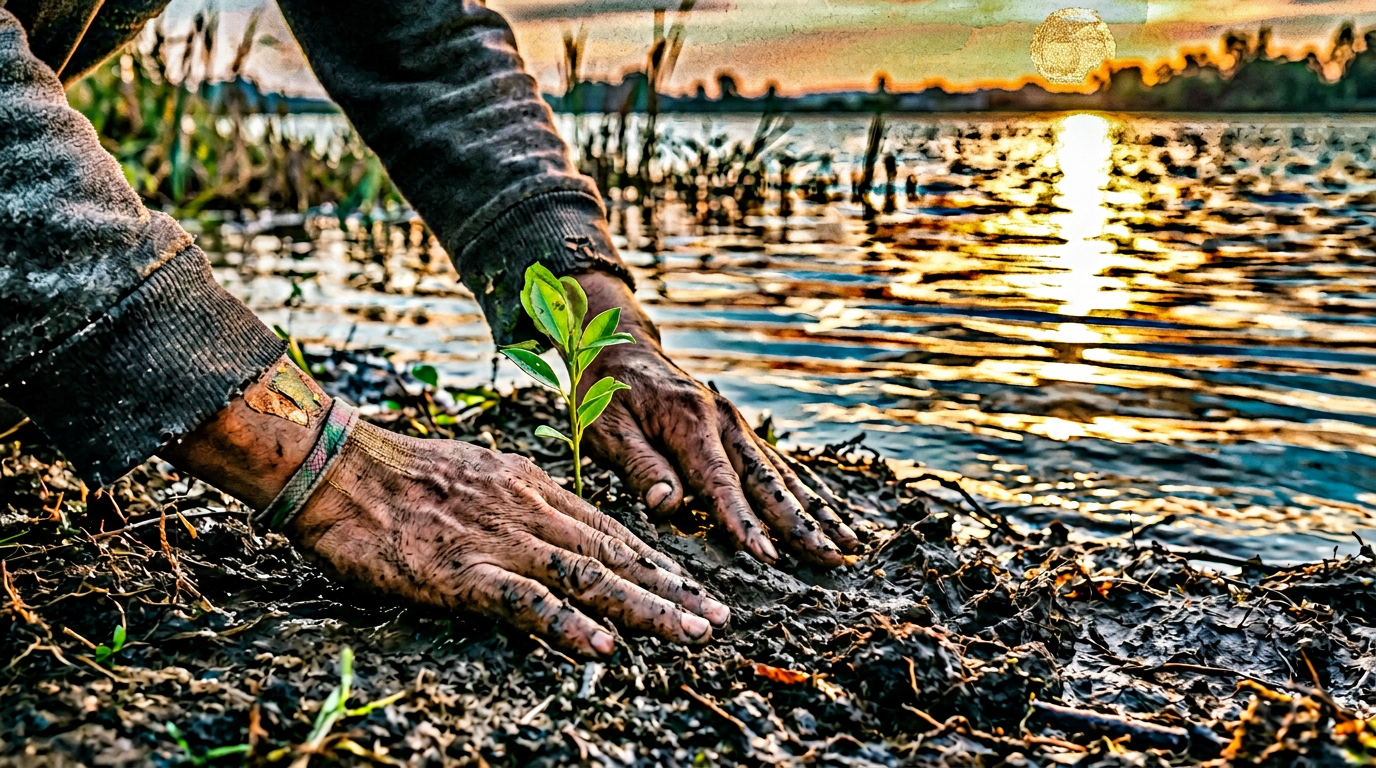
Later, he was told to plant seedlings by the riverbank. He dug holes in the dark soil, placed small shoots, and pressed the dirt gently around their roots. Sweat dripped into the earth. His knees ached. But he saw the plants standing after his labor, small and fragile, yet alive. For the first time, he felt the meaning of care.
Each day he was given tasks. One day patching the roof of the maloka with palm leaves. Another day stirring the pot of sancocho with the women, the steam rising around him as he listened to their stories. Another day helping the children gather wood, their laughter echoing in the trees.
At first he resisted. His pride whispered, “You came for enlightenment, not chores.” But slowly, a new voice rose within him. He began to see the truth: his visions were seeds, and daily life was the soil. Without tending, the seeds would rot. With tending, they would root and grow.
Every evening, he sat with the elders and spoke of what he had seen in the night of collapse. He told them of the jaguar that stalked him, of the river of bones, of the child that cried in his arms. The elders listened in silence, then answered in simple words. The jaguar was not there to kill him, but to test his courage. The river of bones was not death, but the ancestors calling him to remember. The crying child was not a stranger, but the part of himself he had abandoned long ago.
The visitor’s tears came often now, not forced but flowing like water breaking through stone. And when he wept, the elders nodded. “Good,” they said. “Now the vessel is being shaped.”
Weeks passed. His body grew stronger. His speech grew slower. His eyes softened. The restless hunger that had burned in him when he first arrived was quiet now.
One night he sat again in the maloka, though this time he did not drink. He only listened. The curandero sang, the others swayed, and he sat in stillness. He realized then that the medicine was not only in the cup. It was in the fire, the river, the soil, the laughter of children, the silence of the mountains. The yage had opened the door, but it was the life around it that carried him through.
Home with quiet light
At last the time came for him to leave. The people gathered to wish him well. He stood by the fire and spoke, but his words were different now. Less sharp. Slower.
He did not say, “I am reborn.” He did not say, “I have seen God.” Instead he said, “I saw myself die. But more importantly, I learned how to live differently.”
He returned to his home. Months passed. His friends asked him what he had seen. He did not boast. He did not preach. He told them small things. That he was gentler with his children. That he spoke with more honesty to his partner. That he listened more and shouted less. That he carried water every morning and felt grateful for the weight.
And those who knew him saw the difference. The fire had not left scars this time. It had lit him from within.
The question I still sit with
My abuelito looked at me long when he finished the story. His eyes were steady, catching the light of the coals. His voice was soft but sharp enough to cut.
“Everyone seeks the fire,” he said. “Few build the vessel. Remember this, hermano. The medicine is not in the plant. The medicine is in the vessel that holds it. The vessel is preparation. The vessel is the song. The vessel is the elder’s hand. The vessel is how you live when the fire is gone. The fire itself is only the catalyst.”
He leaned back, the smoke curling upward between us, and let the silence stretch. The selva hummed. The river whispered. A night bird called out once, then was gone. Finally he spoke again.
“And you? What vessel have you built? Who holds you when you collapse? What shape have you formed to turn fire into light, instead of ash?”
I sat there with no answer. Only the sound of the coals, breathing in and out. I still carry his question. Because the old man was right. The fire always comes. The only difference is whether it destroys you, or changes you.
After the story: tourism, risk, and humility
Plain words: This tale is story, not an instruction manual—and not permission to hunt extremes because they sound brave. Powerful practices sit inside lineages, law, land, and duty. If you are not in right relationship with a tradition, the ethical move is not to take; it is to listen, defer, or work with what you are accountable to.
Medical and psychiatric risk: Strong medicine states can destabilize people. Some souls need clinicians, not more intensity. If you are struggling, get human help you trust.
Moves
- Before you chase a peak, build the mundane container: sleep, food, community, ethics, supervision.
- Separate spectacle from transformation: if your “proof” is only the story you tell strangers, you may still be unintegrated.
- Ask who holds you when you come apart—person, practice, place—not only an idea.
- Budget integration time the way you budget the event: if there is no room after, do not pretend there will be magic.
- Stay suspicious of pride that arrives early—it is often a bandage, not a birth.
Safeguards
- No cosplay. Do not wear another people’s sacred work as aesthetic.
- Consent and power: healing cultures are not theme parks. Teachers are not props.
- Kids and vulnerable adults: protect them from adults chasing fire for ego.
When you are ready to build structure that can carry what you have seen—or what you hope to become—the assessment is where we begin.