From the journal · Sage
What Divination Actually Does
Divination is not fortune-telling. It is a structured method for surfacing what you are already avoiding, using real pattern systems, not cosmic wish-fulfillment.
Most people come to divination looking for permission or a verdict. They want confirmation that the thing they want is coming, or reassurance that the thing they fear will not. That is not what divination does. That is what wish fulfillment does, and a practitioner who provides that is not reading the chart, they are reading the client’s face.
Divination, practiced correctly, is a structured method for pattern recognition. It does not bend reality to your preference. It shows you what the current conditions are and what they are likely to produce if no meaningful input changes. That is a different, and more useful, service.
What the system actually reads

Real divination systems, astrology, I Ching, Tarot as a symbolic vocabulary, geomancy, and other living comparative-cultural pattern systems, are not magic. They are pattern languages. Each system encodes observations about human behavior, timing, and tendency into a structure that can be queried.
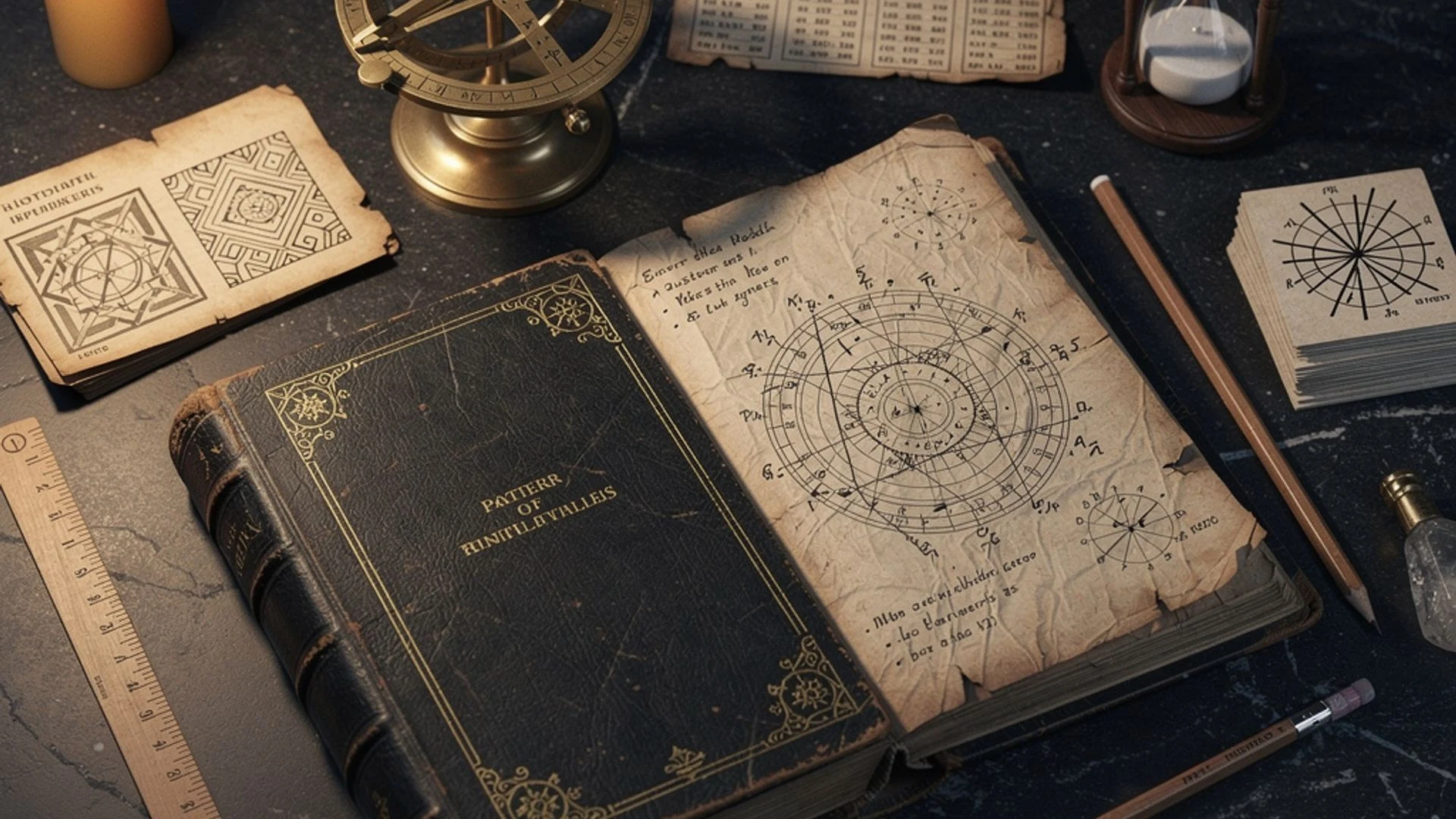
When we run a natal chart here, it is built from real ephemeris data, the actual positions of the Sun, Moon, and planets at the time and location of birth, calculated to the arc-second. There is no symbolic shorthand substituted for observed data. The planet is where it is, not where someone needs it to be.
The chart is then read as a topographical map of tendency: where friction tends to show up first, where drive overreaches into compulsion, where caution converts to paralysis, where natural timing windows open and close. The map does not run your life. But it describes the terrain you are running it on.

The difference between reading and projection

The failure mode of divination is projection dressed in symbolism. A practitioner who tells you what you want to hear is not reading your chart, they are reading your anxiety and feeding it back as comfort.
A real reading will surface what you are already not saying. It will name the pattern that keeps producing the same result in different contexts. It will identify the timing conditions you have been pretending don’t apply to you.
That can be uncomfortable. That discomfort is usually the information.
Here is a reliable test: if a reading leaves you feeling broadly validated without pointing to anything specific to change, examine it. Real readings produce friction at the useful edges. They give you something specific to do, something specific to watch, or something specific to stop.
What divination cannot do

Divination cannot override physics, override your choices, or override another person’s will. It cannot predict outcomes with certainty because outcomes are produced by the interaction of tendency, context, and decision, and you control at least one of those.
It cannot substitute for professional guidance in medicine, law, or finance. A practitioner who presents their readings as doing that is operating outside the actual scope of the work.
It also cannot tell you what you are not yet willing to hear. The information is in the chart. But reception requires readiness, and readiness is yours to manage.

How to make a reading useful

The single highest-leverage thing you can do before a reading is prepare a real question. Not a wish. Not a vague longing. A question with a specific context: what decision are you actually facing, what pattern keeps repeating, what window feels like it is closing.
During the reading, your job is to report what lands, accurately, not in the direction that feels best. When a practitioner names something that resonates, say so. When something does not fit, say that too, because real calibration requires real feedback.
After the reading, the work is yours. A reading is not a prescription, it is a map. You still have to move.
The safeguard
Avoid any reader who discourages your skepticism. Skepticism is not incompatible with divination. The best practitioners treat it as a quality signal. A system that cannot tolerate a hard question is a system with something to hide.
Avoid readings that produce dependency, where you are encouraged to come back for another reading rather than to go act on the last one. The mark of a real reading is that it sends you back into your life with something to use. Not back to the practitioner for more.
That is what divination actually does, when it is practiced without theatrical inflation or comfort-selling. It shows you where you are standing, more clearly than you were willing to look.
In plain words
Divination is not fortune-telling. It is a structured method for surfacing what you are already avoiding, using real pattern systems, not cosmic wish-fulfillment.
Lost in the Astral offers chart work, divination sessions, and guidance for individuals navigating real decisions. Book a session →
Continue reading
More from the journal.

How a Real Reading Works
What actually happens in a session, before, during, and after. And why the work only begins when the reading ends.
Read on
How to Tell a Real Reading from a Generic One
Seven signals that tell you whether the reading you're considering is grounded in real practice, or dressed up to sound like it.
Read on
Where it leads
If this sounds familiar, the next step is simple.
The point is not to collect better language for the same patterns. The point is to identify what is running and decide what happens next.