Welcome to Deconstruction 101. Rules of the dig, up front, because I keep them the way other men keep altars. Rule one: we go to the root, not the brochure. What a tradition says about itself today is evidence about today. What its oldest stones and oldest sentences say is evidence about the root, and the two are rarely the same witness. Rule two: I will tell you, every time, whether what I am handing you is the scholarly consensus, a minority view with good bones, or the tradition’s own claim about itself, and I will not let any of the three sneak in wearing another’s coat. Rule three: nothing gets softened because it is sacred to somebody. If your tradition cannot survive its own archives, the problem is not my shovel. Facts are not negotiated by audience discomfort, and neither am I. Episode one begins where the Western world’s God was born, in a narrow strip of coast and hill country between the sea and the desert that the maps call the Levant. And it begins with a word. Elohim. The word your Bible translates, in the singular, as God. The word is plural. Yes, darling. Plural. Take a breath. We are doing this.
Elohim is the plural of Eloah, and in the Hebrew text it usually takes singular verbs when it means Israel’s god, which is how the translators keep a straight face rendering it as one. Usually. Not always. The grammar has escapees: Genesis 35:7, elohim revealed themselves, verb in the plural, and 2 Samuel 7:23 with the same scandal in broad daylight. And then there is Genesis 1:26, the verse your childhood teachers speedran like it was on fire, where the speaker says, let us make humankind in our image, according to our likeness. Two thousand years of commentary have been poured over that “us” like concrete over a pothole. The tradition’s own claim, and rule two says I state it: it is a royal plural, or the Trinity, who will not be introduced to the text for a thousand years but apparently attended in spirit, or God addressing his angels, who are otherwise never consulted on anything, ever. Majesty, apparently, conjugates. The scholarly consensus is drier, older, and does not need the gymnastics: the “us” is a fossil. It is the surviving accent of a divine council, a court of gods, standing at the head of Israel’s religion before Israel’s religion learned to insist there had only ever been one. Fossils do not appear in rock that was never alive. Something lived there. It had colleagues, a seating chart, and, we will see, a wife situation.
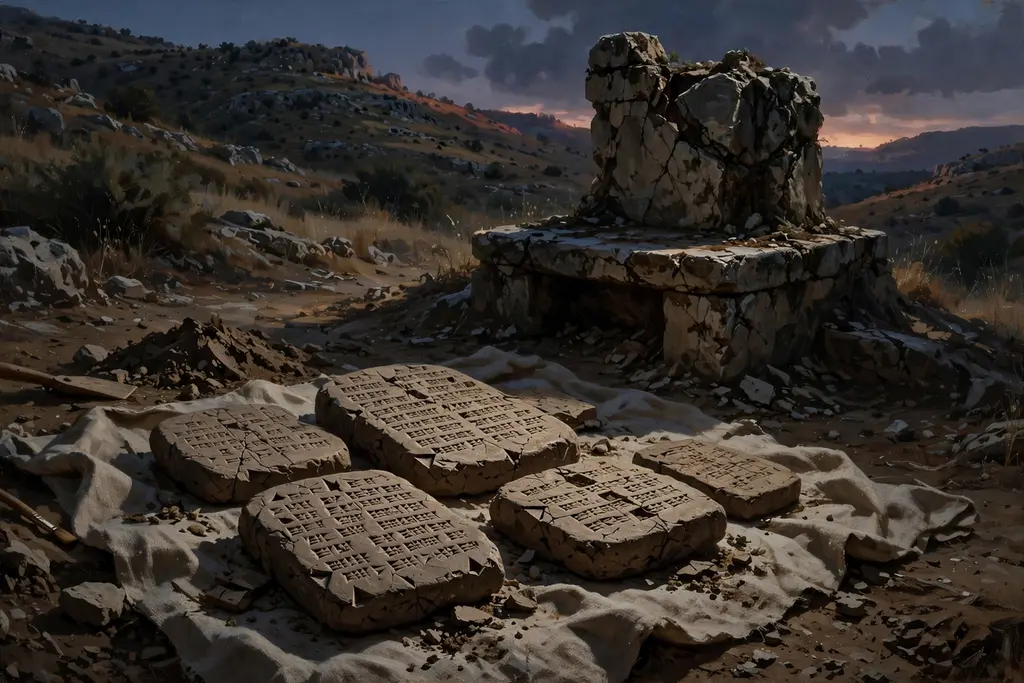
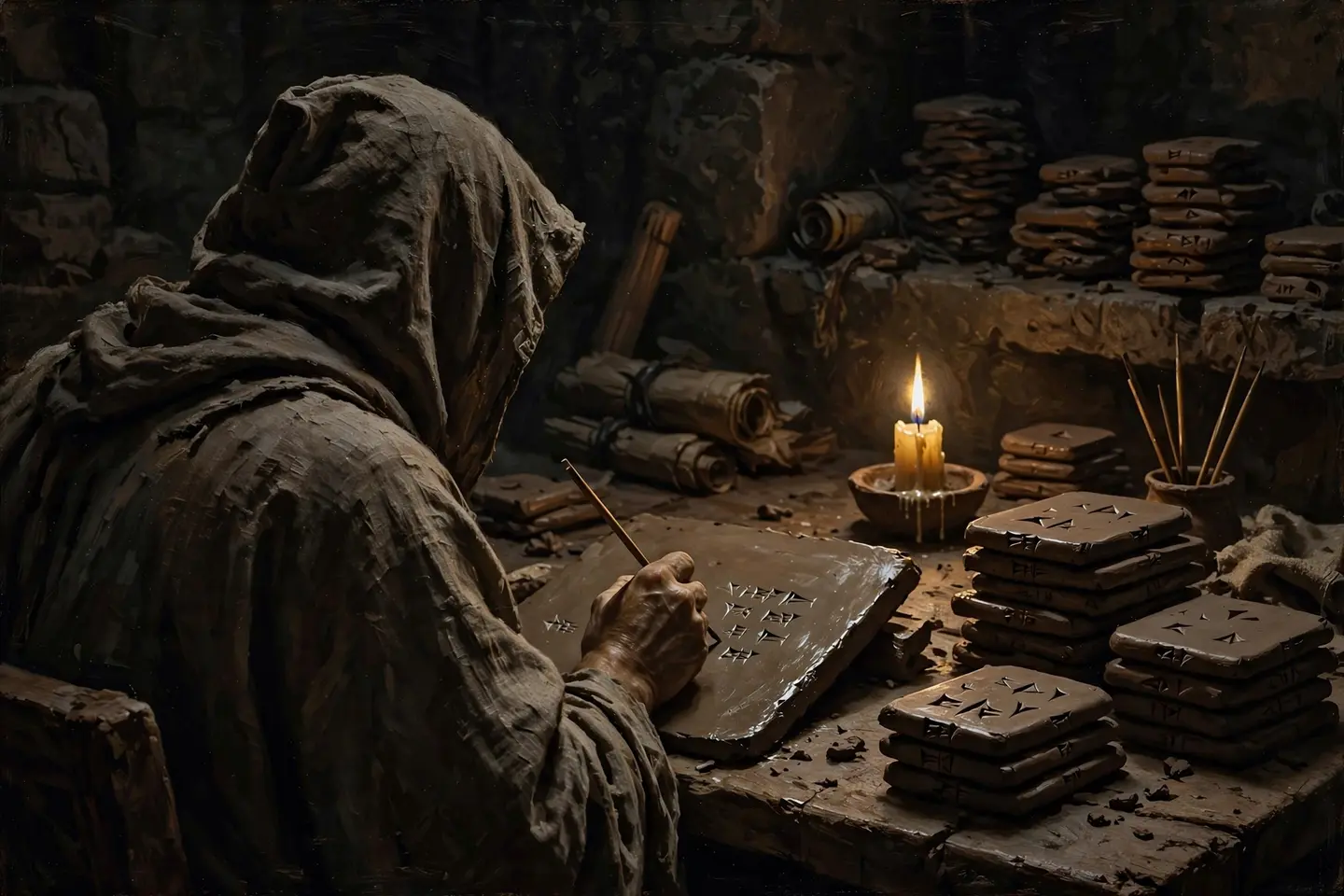
To see it alive, we go north and back, to a ruined city on the Syrian coast called Ugarit, which stayed buried until a farmer’s plow struck a tomb vault in 1928 and did what centuries of theology could not: it produced the receipts. A whole library. Clay tablets in a previously unknown alphabet, fourteenth and thirteenth centuries before the common era, myths and rituals in the native tongue of the Levant. At the head of the pantheon sits a god named El. Old, bearded, enthroned at the source of the rivers, called the creator of creatures, the father of mankind, and in his strength, Bull El. Beside him, his consort Athirat, mother of the gods, the lady who treads on the sea. Around them, the council, the assembly of the sons of El. Beneath them, the younger, louder generation: Baal the storm rider, Anat, who wades through battle like it owes her money, and Mot, who is death itself. Now hold this steady and do not blur it, because rule three has a twin: these are distinct traditions, not one soup. Ugaritic religion is not Israelite religion. Canaanite names a family of cousins, not a single church. But families share bone structure, and Israel was born inside this family, in these hills, speaking a dialect of this language. When Israel’s oldest texts speak of the Most High, the word they use is El. And the name they use for the assembled gods is the very word your Bible renders, singular, as God. Elohim. The sons of El, in council, with a father at their head. The family business, before the rebrand.
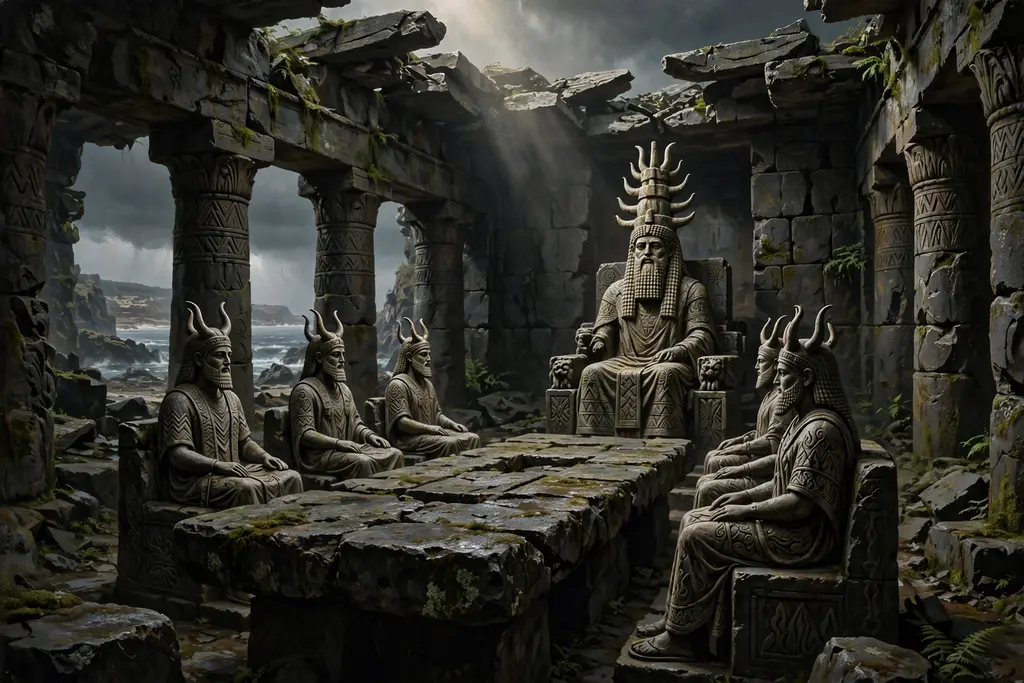
Now watch the fossils crawl up through the floorboards of Israel’s own book, because they do, and no amount of reverence has dissolved them. Psalm 82 opens inside the council chamber: Elohim takes his stand in the council of El; among the elohim he renders judgment. The psalm’s God addresses the assembled gods as exactly what they are: I said, you are elohim, sons of Elyon, all of you; nevertheless, you shall die like men. Elyon is the Most High, an epithet of El. Then Deuteronomy 32, older and blunter, once you read the oldest copies instead of the tidiest. The familiar Masoretic text says the Most High fixed the borders of the nations according to the number of the sons of Israel. The Dead Sea Scrolls, a thousand years older than the Masoretic manuscripts, and the ancient Greek translation after them, say what the poem originally said: according to the number of the sons of God. Next verse, the transaction completes: Elyon apportions the nations among the divine sons, and Yahweh’s portion is Jacob. Read it in that order and the structure stands there naked as a jaybird. Elyon is the high god who divides. Yahweh is one of the sons who receives. Among textual scholars this is not a fringe reading; it is the consensus, held across confessional lines, because the manuscripts say what they say and pretending otherwise is not faith, it is editing. Somewhere down the centuries, a scribe read his people’s founding poem, watched a high god hand Israel to a younger god like an inheritance, and quietly swapped the sons of God for the sons of Israel. The first editor with an agenda and a stylus, and baby, he was not the last. That flinch, preserved in ink, is the sound of monotheism being built by hand on top of an older house it could not quite bring itself to demolish.
So how did the younger god end up wearing the father’s name, titles, and eventually his chair. The texts confess it, if you read them at the root instead of the roof. The patriarchs do not call their god Yahweh. They call him by El’s names, at El’s altars: El Elyon, God Most High, in Genesis 14, whose priest is a Canaanite king of Salem. El Shaddai. El Olam, God Everlasting, at Beersheba. El Roi, the God who sees. And Exodus 6:3 states the merger in the god’s own mouth, in the Priestly writer’s telling: I appeared to Abraham, Isaac, and Jacob as El Shaddai, but by my name Yahweh I was not known to them. The tradition’s own claim is one being, many names, and you are free to believe the tradition. What you are not free to do, under the rules of this dig, is pretend the layers are not showing. They are showing like a slip under a hem. As for where Yahweh himself comes from, the oldest Hebrew poetry keeps pointing south with both hands: Judges 5, Deuteronomy 33, Habakkuk 3, the archaic songs all bring him marching up out of Seir and Edom, Teman and Mount Paran, Sinai and the southern wilderness, never once down from the northern hills of El. Egypt, which had no dog in this fight, kept a witness: the temple list of Amenhotep III at Soleb, around 1400 before the common era, names a desert people as the Shasu of Yhw, the earliest known appearance of the name outside the Bible. The position that Yahweh was a southern god who entered the highland pantheon and fused, over centuries, with El, until two gods stood where one God now sits, is the mainstream of the field. The details are fought over, as they should be. I have handed you the consensus and flagged the fights, as rule two requires. Everybody still standing? Wonderful. Take a sip of water. Here comes the wife.
For a long stretch of Israel’s real history, the root says he had one. Her name is Asherah, Athirat under her Ugaritic name, El’s consort, carried into Israel with the rest of the family inheritance, the way brides cross thresholds. In the late ninth or eighth century, at a caravanserai in the Sinai called Kuntillet Ajrud, someone wrote a blessing on a storage jar that no later editor could get his hands on: I bless you by Yahweh of Samaria and by his Asherah. A second inscription blesses by Yahweh of Teman and by his Asherah. Four words in, and three thousand Sunday schools develop a sudden cough. Whether the Asherah of the inscriptions is the goddess in person or her sacred wooden symbol is a genuine scholarly argument, flagged as one; what cannot be argued is that ordinary Israelites blessed each other in that pairing, in writing, in the open, in the name of Yahweh himself. Your Bible knows it too, from the other side of the pulpit. Count the condemnations. Kings damned for raising her poles, kings praised for chopping them down, for century after century, which is the loudest evidence imaginable of how deep she ran: nobody legislates for four hundred years against a goddess nobody is worshiping. That is not a footnote. That is a marriage. The editors won, eventually. She was written out of the union and recast as an abomination, the ancient world’s most thorough divorce, no settlement, no visitation, her name scratched off the family Bible with a knife. And still she kept turning up on the crockery for centuries afterward, in blessing after blessing, which, if we are being honest, is the most goddess thing she could possibly have done.
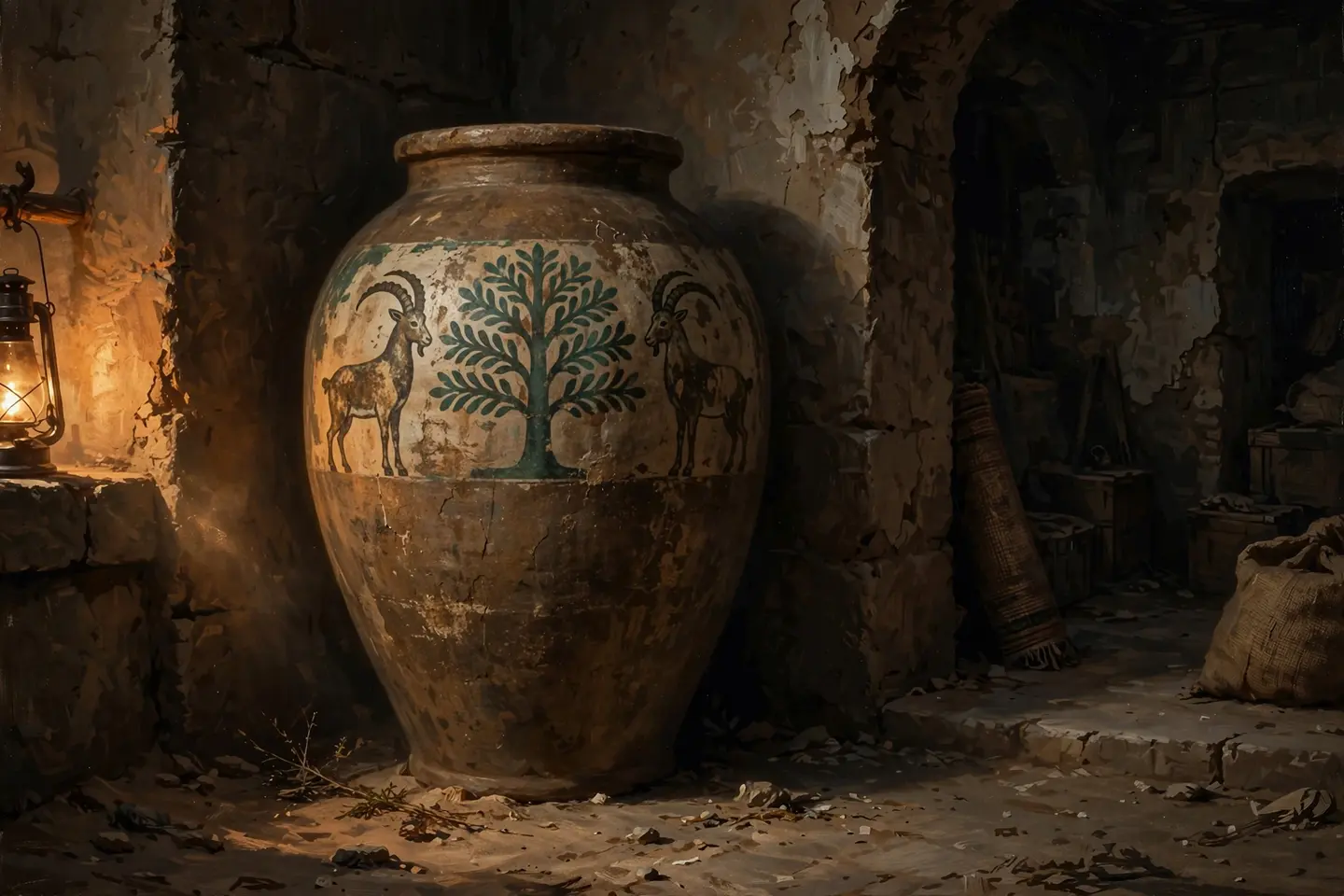
When, then, was monotheism born. Not in Eden. Not at Sinai. Whatever the brochure says. For most of its history Israel practiced what scholars call monolatry: one god worshiped above the rest, the rest acknowledged and mostly left alone, like relatives nobody invites to dinner but everybody admits exist. The unambiguous statements, there is no god besides me, I am Yahweh and there is no other, do not arrive until the prophet of the exile, the voice inside Isaiah 40 to 55, in the sixth century before the common era, when the temple was rubble, the nation was a refugee column in Babylon, and the theology got sharpened to a single shining point by the worst thing that had ever happened to it. That is the consensus, and I will add what the consensus is too polite to say at full volume: monotheism was not the foundation this house was built on. It was the roof the survivors built afterward. A magnificent roof. A true one, by its own lights. But a roof, darling. Underneath it, in the walls, sit a plural noun that no amount of majesty will conjugate away, a council chamber with the father still in it, a younger god from the southern desert who received one nation as his inheritance, and a goddess on a storage jar in the Sinai, blessing travelers in her husband’s name, centuries before anyone thought to be embarrassed by her.
That is episode one. The Levant did not hand the world one God in the beginning. It handed the world a family of gods, and then one family’s long, violent, brilliant argument about why only one of them should remain, an argument so successful that the winners convinced the future it had never happened. We are not taking their word for it. Next time, the scalpel goes to Eden: the garden, the serpent, who happens to be the only character in that story who tells the unvarnished truth, the tree they were forbidden for reasons that get very quiet when you read the fine print, and the sentence in Genesis 3 where God himself, speaking to the council, looks at the humans and gives away the entire game. Until then: mind the fossils. They are load bearing. And so, apparently, is the plural.
If this landed and you want a human in the room, tell the concierge what is going on.
Begin with the concierge