
From the journal · Kacie Hinojosa
What the Body May Be Doing When a Conversation Gets Hard
A change in breath, posture, voice, or movement can signal effort. It cannot tell you the private reason by itself.
Bodies change during difficult conversations.
Breath shifts. A hand returns to the body. Speech slows down. Posture becomes more contained or more restless. Those changes can matter, especially when they appear at the same moment the subject, relationship, or level of pressure changes.
They are not a private-language decoder.
One gesture cannot prove that someone is lying, afraid, traumatized, attracted, angry, or trying to hide something. The same movement can come from pain, temperature, habit, culture, disability, medication, fatigue, self-consciousness, or a chair that has become uncomfortable.
The useful skill is not assigning a secret meaning. It is noticing change without pretending observation has already become explanation.
Start with baseline, not a universal dictionary
People move differently.
One person looks away whenever they are thinking. Another looks away when eye contact becomes too intense. Someone may touch their wrist because it helps them settle. Someone else may be checking an old injury without thinking about it.
That is why baseline matters. What is ordinary for this person in this setting? What changed, and when?
A cue becomes more useful when it is a departure from the person’s own pattern, not merely something a body-language list told you to watch for.
Even then, the cue only supports a narrow conclusion: effort, comfort, attention, or arousal may have changed. The cause remains uncertain until the person tells you, the context clarifies it, or later behavior provides stronger evidence.
Changes worth noticing
Breath that shifts with the subject
A longer exhale, breath held at the top, a sudden swallow, or a pause before the next sentence may show that the person is doing more internal work than they were a moment ago.
It can be a reset. It can also be pain, dryness, fatigue, or deliberate pacing.
The respectful response is not, “I know that question scared you.” It is, “We can slow down if you need to,” or, “Did something about that question change the conversation for you?”
Self-contact or repetitive movement
Hands often return to familiar places when a person is concentrating or settling: palm to thigh, fingers at the wrist, thumb rubbing against another finger, a necklace adjusted more than once.
Repetition can provide rhythm. It can also be a habitual movement, sensory regulation, or simple restlessness.
Notice whether it begins or increases around a particular subject. Do not turn that timing into a verdict.
Sudden stillness
Stillness is often misread as calm.
Sometimes a person settles because they feel safe enough to listen. Sometimes movement decreases because they are concentrating. Sometimes the body becomes contained under pressure.
The difference is rarely visible from stillness alone. Look at the whole change: breath, facial tension, voice, responsiveness, and whether the person returns to their usual range once the moment passes.
Speech that becomes more deliberate
People may pause more, restart sentences, choose formal language, or speak with less variation when the stakes rise.
That does not prove deception. It may mean they are trying to be accurate, protect privacy, avoid conflict, find words for something unfamiliar, or manage a strong response.
Give the person time. A hurried listener can create the very speech disruption they later misinterpret.
Gaze that moves away and returns
Looking away can reduce stimulation and make it easier to think. It can also reflect cultural norms, visual processing, discomfort, or attention to something else in the room.
The return matters more than a simplistic eye-contact rule. Does the person reengage? Do they answer the question? Does the interaction become clearer after the pause?
Eye contact is not a morality test.
Read clusters, timing, and recovery
A single cue is weak evidence. A cluster can justify curiosity.
Suppose the subject changes and, at the same moment, the person’s breath shortens, shoulders rise, hand closes around the opposite wrist, and speech becomes unusually careful. That cluster tells you the moment probably carries more load.
It still does not tell you why.
The next useful information may be recovery. After a pause, does breathing become easier? Does speech regain its ordinary rhythm? Does the person stay engaged, ask to stop, or change the subject?
Those observations help you respond to the interaction without claiming access to the person’s hidden thoughts.
What to do with what you notice
If you are a coach, practitioner, leader, partner, or parent, the ethical use of nonverbal information is to improve consent and pacing.
- Slow down instead of pressing for disclosure.
- Ask a neutral question instead of announcing an interpretation.
- Offer a choice to continue, pause, or return later.
- Keep power in mind. A client or employee may say “I’m fine” because refusal feels expensive.
- Treat the person’s words and later behavior as evidence, not obstacles to your intuition.
Observation should make you less invasive, not more confident in a story the other person never confirmed.
The body in bodywork
In licensed bodywork, the same discipline applies. Tissue response, guarding, breath, range, and reported sensation can guide technique and pacing. They do not authorize a practitioner to assign a psychological history to the body.
Kacie can notice that an area is guarded, that pressure changes breathing, or that a movement produces a protective response. The client still owns the meaning of their experience. The practitioner’s job is to work inside scope, ask, adjust, and document what is actually observable.
That boundary protects both precision and trust.
In plain words
The body may show that a moment became harder. It does not tell you the reason in a code only an expert can read.
Notice the change. Compare it with the person’s baseline. Ask instead of declaring. Use what you observe to create more room for consent, not more confidence in your own inference.
Continue reading
More from the journal.
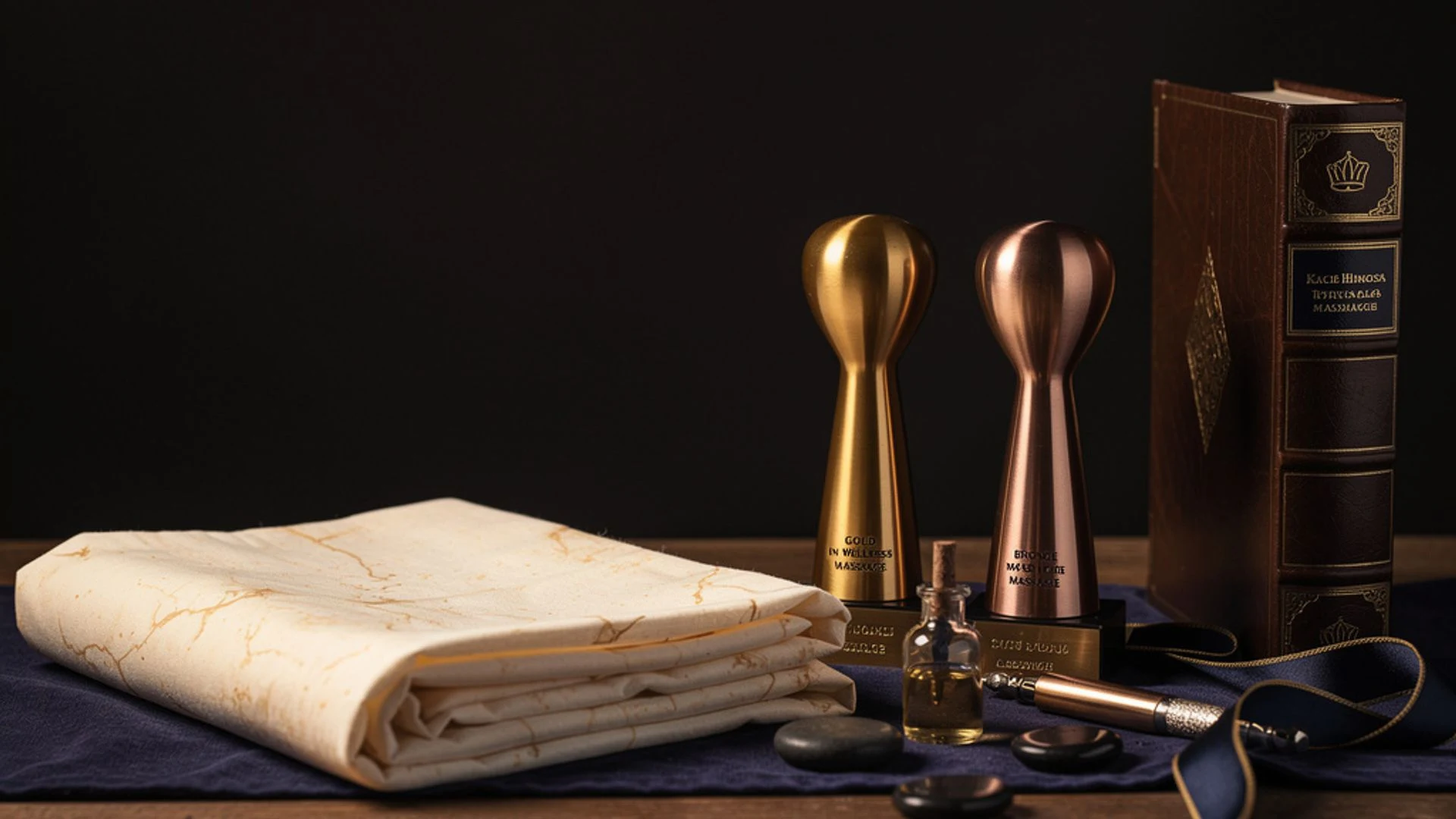
Kacie Hinojosa Earns Gold in Wellness Massage and Two Bronze Awards
At the 2026 Oregon Open Massage Championships, Kacie Hinojosa earned gold in Wellness Massage, bronze in Sports Massage, and bronze overall.
Read on
What 30+ Years of Comparative Religion Looks Like in a Reading
What changes in a session when the practitioner has spent decades on serious comparative religion and cultural analysis. Honest practice in plain language.
Read on
Where it leads
If this sounds familiar, the next step is simple.
The point is not to collect better language for the same patterns. The point is to identify what is running and decide what happens next.