
A client once spent twenty minutes telling me, in careful and slightly heated detail, about a coworker she could not stand. The coworker was loud about her accomplishments. She announced her wins in meetings. She took credit in front of people, out loud, with her whole chest, and it made my client’s skin crawl every single time. When she finished, I asked her one question. When was the last time you told anyone, out loud, that you did something well? She stared at me. Then she laughed in the way people laugh when something lands in a place they had been keeping locked, and she said she could not remember. Not once. Not ever.
That is shadow work in one small scene, and archetypal theory is what lets you read the scene clearly.
Let me define the terms the way the literature actually draws them, because these words get worn smooth by people who love them as decoration. An archetype is a pattern of force in the psyche, but Jung was more careful than most of the people who quote him. He distinguished the archetype as such from the archetypal image. The archetype as such is an inherited structuring tendency, a readiness to organize experience into certain shapes, and Jung insisted it is unknowable in itself. His comparison was to the axial system of a crystal, which determines how the crystal forms in the solution without being a separate thing you can hold. What we actually meet, in dreams, in stories, in the figures that show up in a reading, are archetypal images: the pattern dressed by a culture, a century, a personal history. The same underlying pattern wears a stone goddess in one age, a fairy tale queen in another, and a face on a card in my hands in this one. That distinction matters in my work. When I read tarot, I am handling archetypal images, and an image can be studied, questioned, and set down. The archetype itself stays underneath, inferred and never possessed. It is not a costume, it is not an aesthetic, and it is not a personality quiz result to put in a biography line. It is a shape that human wanting and fearing tends to pour itself into, the way water takes the shape of a riverbed it did not choose.
It is also honest to say the field argues about all of this, out loud, in print, and has for decades. Jung revised the idea across fifty years of writing and never fully settled it himself. Many post-Jungian thinkers, George Hogenson and Jean Knox among them, now describe archetypes as emergent: patterns that arise out of development, embodiment, and culture working together, rather than fixed contents inherited ready made. Christian Roesler reviewed the research and concluded that the evidence for archetypes as inherited images is thin. Defenders such as Anthony Stevens argue the other way, that the patterns track human ethology too closely to be cultural accident. I hold the concept the way I hold anything in my field, as a live framework with a real debate inside it, not as settled fact and not as decoration. For the work in this essay, the debate changes less than you might expect. Whether the riverbed was inherited or carved into you early by the water of your first years, the riverbed is there, it predates your opinions about it, and it will shape your reactions until you can see its shape.
The shadow, in this scheme, is everything about yourself that you decided, usually very young, was not allowed in the room: the anger, the envy, the hunger, the need, the ambition that got called selfish before you were old enough to argue. Exiling a part of yourself does not retire it. It just stops telling you what it is doing.
Shakespeare is where I send people who want to see archetypes with their skin on, because he wrote the patterns centuries before psychology got around to naming them. Lady Macbeth is not a woman with ambition issues in the modern sense; she is what happens when the hunger for power is exiled so completely that it can only move in the dark, by whisper and by proxy, and it comes back wearing madness. Falstaff is the Fool and the appetite in one enormous body, everything respectable society said could not sit at the table, alive and funny and impossible to kill. Hamlet is the Thinker cut off from the part of him that can act, arguing with his own exiled half in graveyards. Nobody wrote a psychology textbook in the fifteen hundreds. Shakespeare just watched people honestly and wrote down the shapes. When you learn to see those shapes in his characters, you start seeing them at your own kitchen table, and that is the point.
Here is the working insight that archetypal theory gives shadow work, the one I use every week. The archetype you over-identify with points directly at the one you exiled. They travel in pairs, like two ends of a rope. If you are the tireless Caregiver, the one who holds everyone, who never needs anything, who is thanked at every holiday for being the strong one, then somewhere underneath you there is a buried Selfish One, and I use that name deliberately, because that is what she got called when she was seven and asked for something. She did not die. She went underground, and now she runs parts of your life without supervision: the resentment that leaks out sideways, the exhaustion you cannot explain, the fantasy of a hotel room and a turned-off phone. If you are the Ruler, orderly, contained, allergic to looking foolish, then the Fool is yours, the part that wants to be loud and wrong and unbothered, and he will keep embarrassing you at parties through other people’s behavior that you cannot stop judging. One more refinement, because it changes how people hear this: the over-identified figure is usually not a private quirk. It is a persona, the mask that earned its keep by being rewarded, and over-identifying with a mask is how a person ends up possessed by the very figure they think they are performing. The Caregiver who cannot stop is not expressing herself. She is being run.
Which brings me back to my client and her loud coworker. The irritation was the map. A trait in someone else that bothers you wildly out of proportion is very often your own exiled material waving at you from across the room. Not always. Some people are simply rude, and discernment matters. But when the reaction is bigger than the situation, when it follows you home and sits at your table, it is worth asking what part of you recognizes that behavior so fluently.
So here is how to actually start, concretely, in order.
First, pick the trait. Think of the person whose behavior irritates you out of all proportion, and name the trait in plain words: she takes credit, he shows off his body, she asks for help constantly, he never takes anything seriously. Write it down. Second, name the exiled part like a person. Not a diagnosis, a character. Give it the name it was called when it got sent away: the Selfish One, the Loud One, the Needy One, the Fool. Third, ask what it protects. Every exiled part started as a guard dog. The Loud One often protects a kid who was invisible. The Selfish One usually protects someone who was drained dry and called good for it. Write the answer down even if it feels too simple. Fourth, give it one honest job in daylight. Small, real, and allowed. If your exiled part is the one who wants credit, your job is to say one true sentence this week: I did that, and it went well. If it is the Fool, your job is one hour of purposeless play with nobody watching your dignity. Fifth, keep a short written log for two weeks. A few lines a day. What the trait was, where it showed up, what you did with it. Two weeks is long enough for the pattern to stop being a theory and start being a face you know.
Now the warnings, because this work has real edges and I would rather be plain than fashionable. Do not diagnose yourself with mythology. An archetype is a lens, not a label, and the moment it becomes a verdict about who you permanently are, it has stopped being useful and started being a cage. Do not use archetypes as excuses. Finding your buried Selfish One does not license selfishness; it explains a pressure so you can govern it, and governing it is the whole job. And a warning specific to our moment: the tidy lists of twelve archetypes that circulate online, the Innocent, the Sage, the Explorer, arranged like a menu, descend mostly from a branding book, Margaret Mark and Carol S. Pearson’s The Hero and the Outlaw, which borrowed Jung’s vocabulary for marketing strategy. Pearson’s own earlier psychological work is more careful than the menu version, but the menu is what travels. Using those words as casual vocabulary is harmless. Mistaking a marketing taxonomy for a psychology of the soul is not, because Jung’s figures refuse the tidiness: they contradict themselves, they carry their own shadows, and they will not stay in their boxes, which is rather the point. Finally, if the work opens something that floods, if a memory or a grief comes up that is bigger than a journal page, stop and get support from a person qualified to sit with you in it. Shadow work is real work. Treat it the way you would treat deep water.
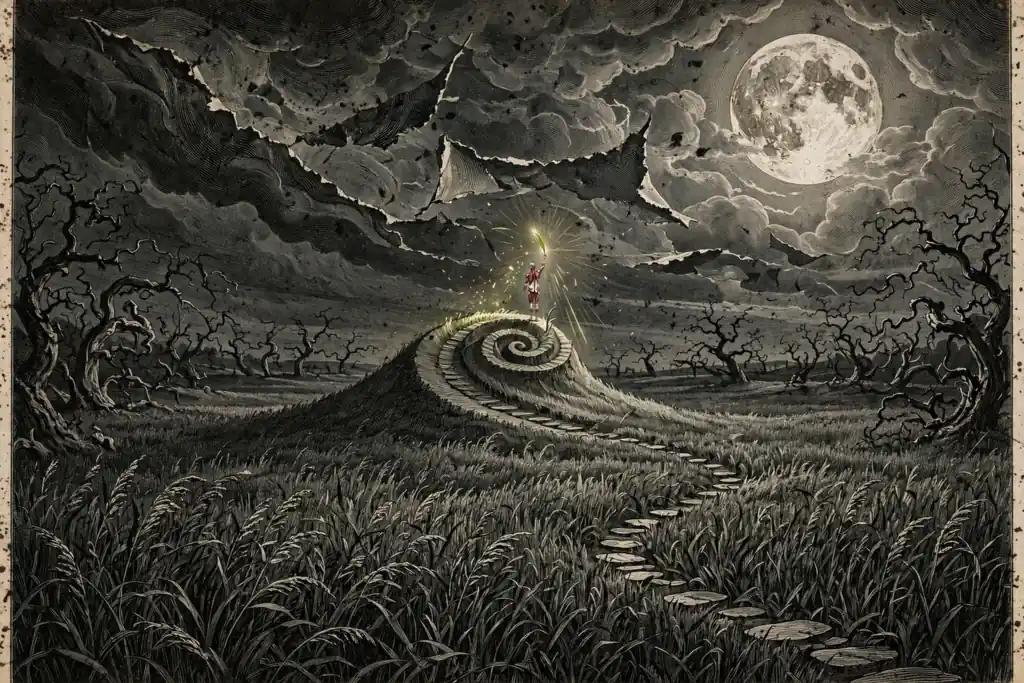
I will close with the caution I give every client who falls in love with this material in the first week, because they do, and I understand why. Understanding one archetype is one blade of grass. It is real grass, and it is genuinely yours, and the meadow is still out there, much bigger than the piece in your hand. The work is to keep walking the field: the pairs, the logs, the small honest jobs, the parts of you coming back into the room one at a time. You do not finish your shadow. You build a working relationship with it, the way you would with any powerful neighbor you intend to live beside for the rest of your life. That, in the end, is what the old frame of individuation actually promises. Not a finished self. A whole one, still in conversation with everything it contains.
If this landed and you want a human in the room, tell the concierge what is going on.
Begin with the concierge