

I held a message for four months once, and holding it was the hardest part of the work I have ever done.
A woman came to me in early spring for a tarot reading about her work. She did not come looking for mediumship. She came with an ordinary crossroads kind of question, and her father showed up anyway. That happens more often than people expect. The dead do not always wait for an invitation, and they do not consult my schedule. He was clear and insistent, and what he wanted me to tell her was specific advice about a decision she had not told me she was facing. She had not mentioned the decision. She had not mentioned him. She had asked me about a job.
I finished the reading she had requested. I did not deliver the message. I wrote it in my notebook with the date, the context, and the words as nearly verbatim as I could keep them, and I closed the book.

That notebook matters to me. I grew up writing by hand before every passing thought lived in a phone, and paper still slows me down in the right way. A dated note separates what I received from what I inferred and what I might later be tempted to polish. Memory edits. A notebook is not proof, but it is a discipline against revision.

People assume the hard part of mediumship is hearing. It is not. Hearing is the easy part, the way hearing a phone ring is easy. The hard part is standing in the doorway between two worlds with a living person on one side of you and someone they love on the other, and deciding whether what you are carrying gets set down in front of them or kept in your own pocket until the ground can hold it. I met Jack Skellington as a kid, and The Nightmare Before Christmas has never really left me. Jack finds a forest of doors and walks through the wrong one with wonder, confidence, and the best intentions in the world. The film is what happens next. Meaning well did not make the door the right one, and it did not give him consent to rearrange somebody else’s holiday. I think about that every time a message arrives outside the work a person actually requested. A door being present is not the same as being invited through it.
The first distinction I was trained to make in integrative healthcare still governs the room: a message received is not automatically a message I have been given to deliver. Receipt, custody, and delivery are separate responsibilities. I may receive an impression. I may hold it accurately and privately. Delivery requires a different test, because delivery changes another person’s inner life. The spirit’s insistence does not settle that test. Neither does my confidence. The living person’s consent, capacity, and welfare settle it.
Consent, in the sense I use it, is not a signature at the start of an appointment. It is informed, specific, and revocable. A client who agrees to a tarot reading about work has consented to that task, within that frame, for that sitting. She has not consented to mediumship merely because a deceased relative becomes perceptible to me. She has not consented to have the session change species halfway through. If I believe the new material may matter, the ethical move is not to smuggle it in as a fascinating aside. The ethical move is to pause, name the change without revealing the content, and ask whether she wants to open that door now, later, or not at all.
Assent is not enough. A bereaved person may nod because she is startled, because she does not want to disappoint the reader, or because the possibility of contact feels too precious to risk refusing. That nod may be compliance rather than choice. In healthcare ethics, the difference matters whenever one person holds knowledge, status, or a service the other person wants. It matters at my table too. Real consent leaves room for no, and for a person to hear the first sentence and say, “Stop. I thought I wanted this, and I do not.” If I continue because the message feels important, I have stopped serving her and started defending my delivery.
Scope of practice is the second boundary. Mediumship, as I practice it, is listening and witness. It is not grief therapy, crisis care, medical advice, or a substitute for the person’s own judgment. I am not there to establish proof or turn a sitting into a demonstration. Advice does not become an instruction simply because it came from the dead. The dead can be loving, limited, mistaken in emphasis, or speaking to one moment in a larger life. Even when I trust what I received, I present it as material to consider, never as a command.
That caution is not decorative. Grief changes how people receive language. Longing can make a vague sentence feel exact. Authority can make an interpretation feel like a fact. A reader who says, “Your father wants you to forgive your brother,” may give the client a story that settles into memory beside things that actually happened. Over time, the source can blur. A statement made by the medium can be remembered as a statement made by the father, and an interpretation can acquire the emotional force of a recovered memory. Practitioners who work with grief have to take suggestion and false memory risk seriously because love can make the bereaved permeable.
For that reason, I separate the message from my reading of it. I will say, “The words that came were this,” and then, separately, “The meaning I make of them is this.” I do not embroider missing context to make the delivery sound more impressive. I do not insist when the person says it does not fit. I do not treat recognition as the only acceptable response or tears as proof that I was right. A recipient may need time before she knows what belongs to her and what belongs to the emotional weather in the room. Preserving that interval is part of the duty of care.
Edgar Allan Poe understood the irreversibility of a haunting. His narrators hear the sound beneath the floorboards or the tapping at the door, and the terror lies in what the hearing begins to do inside the mind. A message from the dead can rearrange furniture after the session ends. It can alter how a daughter remembers a father, how a widow judges a choice, or how a son understands the last year of a marriage. Once spoken, it cannot be unheard. That is why the first question is never simply, “Did I receive something?” The better questions are harder. Who asked for it? What exactly did they ask for? Are they steady enough to refuse it, question it, or leave it unsettled? Will delivery expand their agency, or will it make my voice and the voice I claim to carry harder for them to escape?
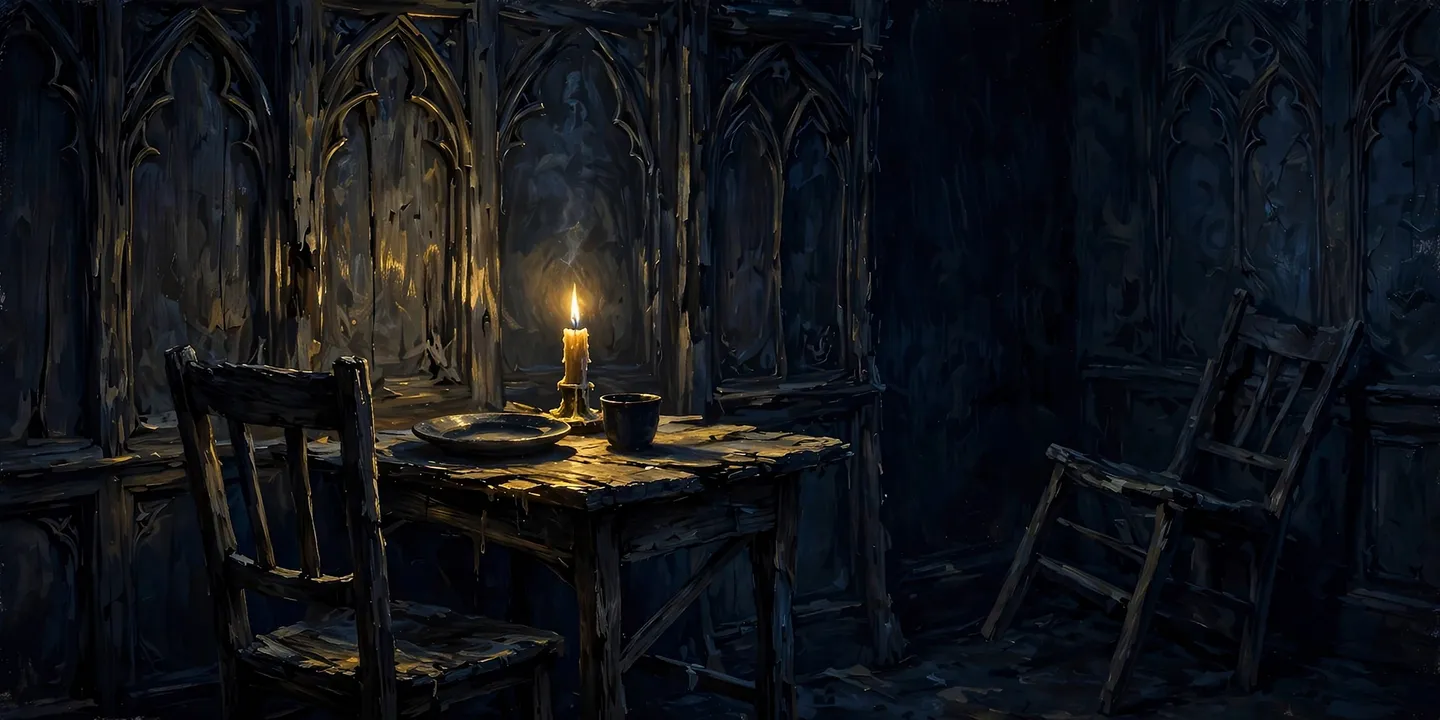
I pass a message on when the person has asked for mediumship in plain terms, understands that she can stop, and remains oriented enough to choose. I pass it on when the content is relevant, proportionate, and offered without pressure to obey it. I give it cleanly: the impression, the limits of my certainty, and the distinction between quotation and interpretation. Then I stop. Her response belongs to her. Silence may be processing. Ambivalence may be discernment. A no may be the healthiest sentence in the room.
I wait when there has been no consent, or when consent to one service is being stretched to cover another. I wait when the message would only frighten and there is no action the person could meaningfully take. I wait during the rawest timing, the week of a funeral, the hospital corridor, the first holiday, the anniversary that has already taken all the strength the day had. I wait when a stranger in a coffee line has done nothing but exist near a perceptive person. Most of all, I wait when the message concerns a grief the recipient is still living inside and the advice, however wise it may sound, would require emotional room she plainly does not have yet.
Waiting is not the same thing as suppressing. I write the message down, keep it private, and revisit it only if the person’s own life brings the question back or she asks whether anything ever came through. Some messages in my notebook have waited months. A few have waited years. A few may never be delivered because the person has built a good and peaceful life on the far side of loss, and reopening the door would serve my record of accuracy more than it would serve her. I have made my peace with being a keeper of undelivered mail. Confidentiality is not a storage problem to solve by disclosure. It is part of the trust under which this work happens.
Four months later, the woman returned. She had made the job decision. Before I touched a card, she told me she had been dreaming about her father and felt ready to hear anything he might have for her. This time, before opening the notebook, I asked whether she wanted the message, whether she wanted to know when I had received it, and whether she wanted the option to stop me after the first part. She said yes to the message and yes to the date. She understood that I had held something, and she still chose to hear it.
I read the spring message, and I told her why I had waited. She cried, but it was the loosening kind of crying, not the kind that signals a person has been cracked open against her will. The advice entered her life like a key in the right door instead of a stone through a window. Nothing about the message had changed. She had. In April, hearing it would have taken a work session and turned it into an ambush by grief. In August, she had chosen the subject, chosen the hour, and chosen the terms. The difference was not the accuracy of the message. It was her sovereignty over its arrival.

That is the standard I keep returning to. A medium who pauses is not a medium who failed, and a message withheld is not wasted. The spectacle version of this work treats every impression as an emergency broadcast and every hesitation as fear. My job is to listen carefully, record honestly, reason about consent and consequence, and witness the living without conscripting them into somebody else’s urgency, including the dead’s.
Their peace comes first because peace is not merely the absence of pain. It is the protected space in which a person can meet pain in her own order and decide what the dead mean in the continuing story of her life. A real message can wait for that space. If it cannot wait, I have to ask whose need is driving the delivery. Most days, the faithful act is not to open the door. It is to stand beside it, keep the message safe, and let the living person turn the handle.
If this landed and you want a human in the room, tell the concierge what is going on.
Begin with the concierge