
From the journal · Scott Hinojosa
The Rending and the Rebirth
A temple, a broken ritual, a violent crossing, and the structural break of an old pattern into a new form.
The following is an original LITA myth. Its order, temple, beings, and cosmology are fictional and do not depict a living spiritual tradition.
Night inside the temple

Every temple keeps a little night in its corners. Even this one’s.
The sage stood at the basin with his hands submerged to the wrists and his breath aligned to the rise and fall of the water. He spoke syllables older than the cracked bricks beneath his feet, words smoothed by use until they fit the mouth like river stones. He was not merely a priest.
He belonged to an order that remembered the flood without speaking of it. His duty was simple and impossible: keep the world from tearing.
The water tasted wrong before the air admitted it. There was iron along his tongue. A silence arrived as thin as silk, the kind that walks ahead of a scream.
The torches shivered. Shadows along the pillars bent at angles stone does not accept.
She stepped out of that wrongness as if the temple had been hers all along.
The Tearing One moved like a hunger that had learned to stand on two legs. Her feet scraped the floor and left marks where marks should not take. Bowls that had known clean water for decades turned cloudy in a heartbeat. The sweetness in the incense turned thick and rotten.
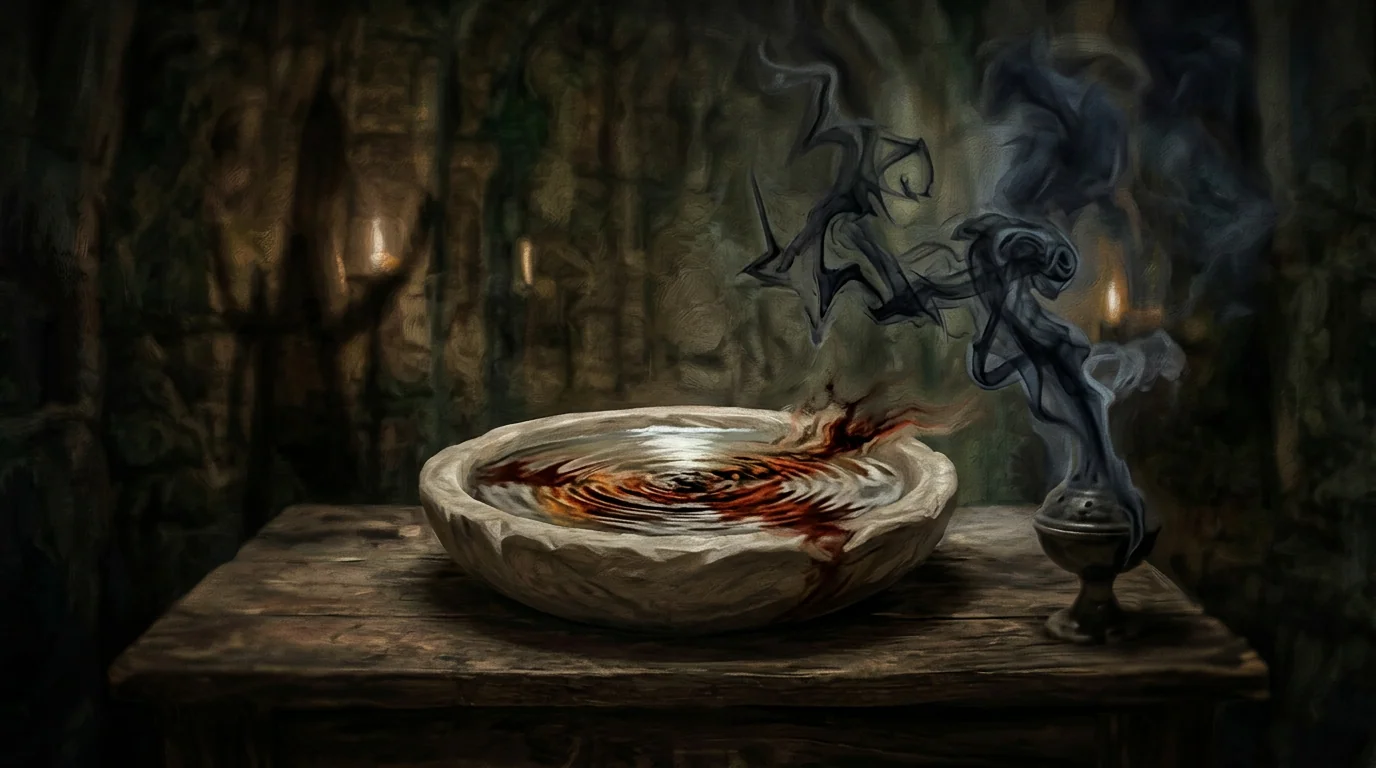
The sage did not take his hands out of the basin. That was not bravery. It was training older than memory.
He gave the formal warning because form matters even when danger does not care. The words named the temple’s guardian and named her as bound. The words had bound lesser things.
She laughed.
The name and the riders

He reached for a name that is both blade and prayer.
The Protector.
The name struck the air and scorched it. Heat crawled along the ceiling the way a desert wind crawls along a road at noon. Dust lifted from the floor in spirals. The sage’s body arched and opened and the rider entered him like a storm taking a mouth.
The Protector seized tendon and nerve and used them like reins. The Tearing One lowered her head and lunged. The wind from the river and the wind from the desert met inside a human frame and tried to tear that frame into two answers at once.
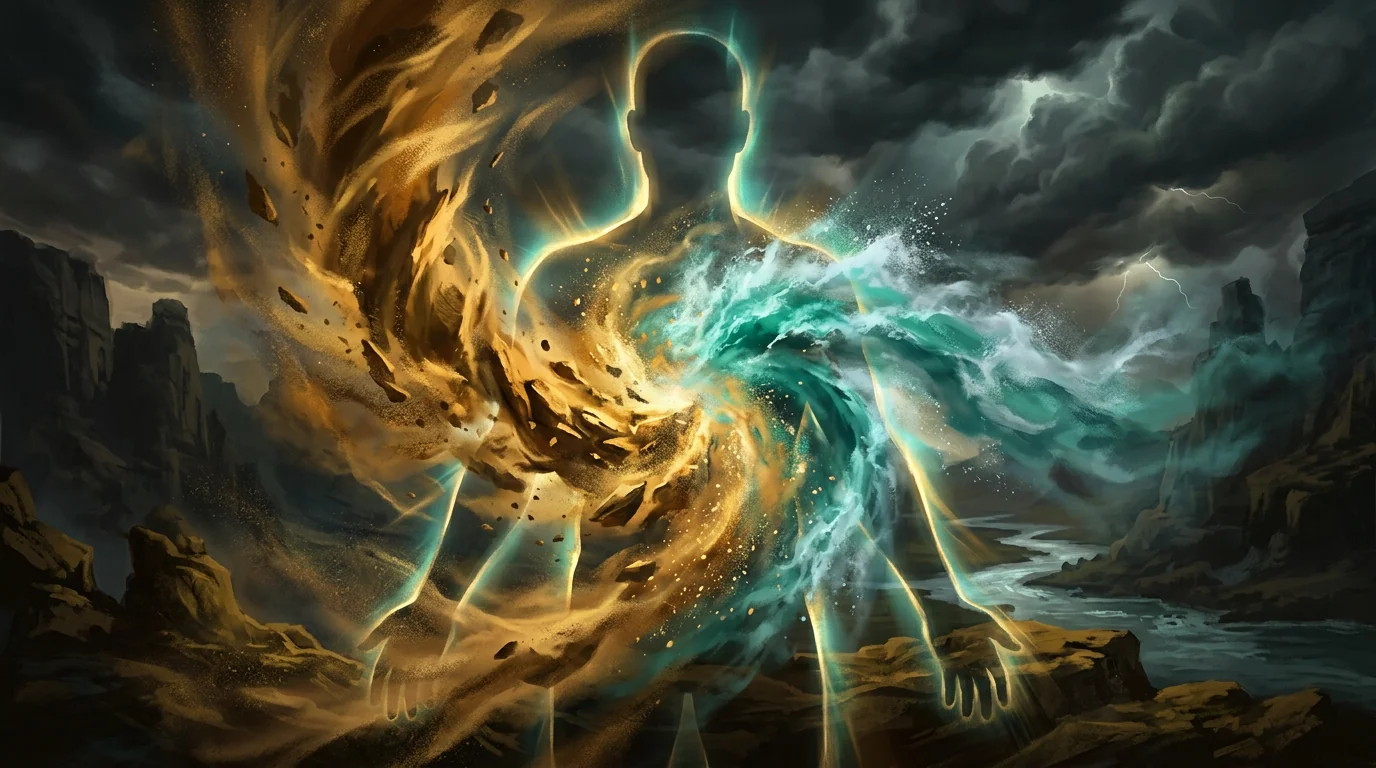
The basin toppled. Water slapped the floor. A carved fish lost its tail to a crack that ran through the mortar. A pillar found a seam it had been hiding and opened it.
He cannot remember later how long he was himself and how long he was only a house for another will. He knows only that the Protector clutched flesh and bone while the Tearing One’s talons cut paths through air that left no mark you could repair with plaster. He felt the ritual not as a text but as a shape the body keeps as posture.
He felt the shape slip. He felt the precise place where the pattern failed to close.
That thin incompletion was the door she had been waiting for.
The tear

She reached into the chant and pulled a single thread from the braid. There was a sound like a rope snapping under a load you thought it could hold. The temple was not the thing that tore. The idea of a room in this world was the thing that tore.
Behind the tear there should have been the underland everyone names even if the names change. There was only a white absence bright enough to sting the eyes before they could turn away.
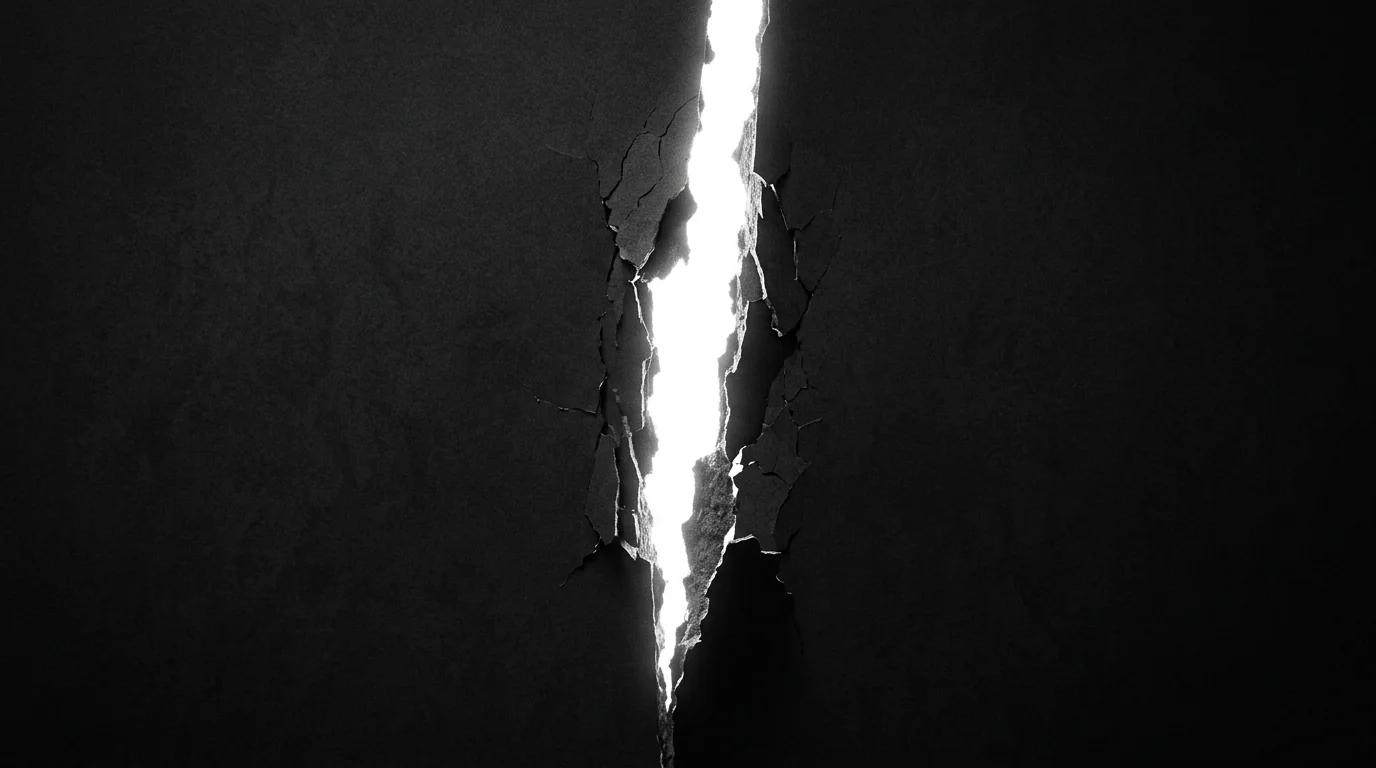
The Protector’s claws sank deeper. The Tearing One laughed and pulled as if the sage weighed no more than the bowl she had already knocked from his hands. Bones lost their agreement with each other.
Flesh turned into something that could not remember how to be flesh. The body could not remain where the song was broken.
He did not go alone. The binding had begun when it should have finished, and in that unfinished state it held like a net not tied along the last edge. The Protector had no room to escape. He was caught on the same hook.
There was a long falling that did not use distance. Then there was a hard sound like a wave’s edge breaking air.
The first breath hurt. All first breaths do.
He cried before he understood why. All first cries are the same.
The shore

He was new. He was human entirely. He was small and his skin was the thinness of petals.
The reed basket that held him smelled like sun on riverbanks and old hands. The tide rocked him in a rhythm he had always known except now it was outside him instead of underneath his ribs.
The Protector was bound inside the new life and learned it in a rage that found no exit. He pushed against bone and found bone new and soft. He pulled against breath and found breath that would break if he took it. He tried to roar and it was like pressing his face into a pillow.
The sea changed its mind with a logic that belonged to someone watching. The deep-water mother rose from below without splash because the sea lets a mother pass when she is working. She slid her hands under the reed and steadied what the wave had been asked to carry.
She looked into the face of the infant. She saw the other inside the one. She did not chase it away.
The basket touched the beach as gently as a palm set on the back of a sleeping child.

A woman lay not far beyond the wet sand. A second woman knelt beside her with hands that smelled of leaves and smoke and iron. She went to the basket, drew the reeds apart, and saw at once that there were two gazes behind one set of lids.
She did not shrink. She wrapped the infant and turned toward the sea and inclined her head to where there was no longer a face. The water lifted once as if it had nodded in return and then subsided.
She would not tell the village that night. Villages are many things, and one of them is a mouth that speaks faster than wisdom. She tended the mother.
She fed the child when a breast could not. She watched the edges of the hut with the same attention she used for the set of a bone.
The oddness of the child did not raise a shout because it did not yet need one. A snake came toward the doorway and then turned. The cook fire flared when the infant cried and then settled. At night the child made sounds that were not the sounds of his people.
The healer carried him outside one evening and waited until he opened his eyes to the sky. The wind turned the corner of the hut and then decided it did not have to go anywhere in particular. For one beating of a heart the clouds formed the suggestion of a head with a jaw that did not respect the plans of men and wings that would not fit anywhere except above. Then the shape went away.
The child sighed and closed his eyes. The woman stood alone and felt a thin cold slide along her spine and then leave.
She looked toward the line where the sea was only sound in the dark and said a thing out loud because sometimes words need a listener bigger than a room.
“The riders are not done.”
The sea answered by continuing to exist, which is its most persuasive argument.
After the story: pattern, rending, return
Speculative content, said plainly: This is mythic language, not a claim about historical events. It is a map for an inner fact many people meet: the moment a pattern stops closing, the force that rushed in to manage the emergency, and the humiliating smallness of whatever new form you wake up inside. Maps are for navigation, not for confusing with the weather report.
Moves
-
Locate the thin incompletion, where your old ritual (habit, role, belief) no longer completes its loop. Name it without drama.
-
Separate rider from substance, anger, panic, persona, genius: what is Borrowed, what is you?
-
Refuse the theater of strength after rupture. First humane requirements: sleep, food, witness, not a narrative that redeems the break overnight.
-
Choose one elder technology: body practice, therapy, skilled friendship, prayer, something that can hold contradiction without forcing a slogan.
-
Watch for premature “rebirth” storytelling, sometimes you are still in the basket.
That is not failure; it is chronology.
Safeguards
- Do not romanticize collapse. Some rendings need medical care, safety planning, and professional containment, not only symbolism.
- Treat living traditions as living. This story uses an original fictional cosmology rather than claiming another community’s rites, titles, or initiation.
- Integration follows rupture, if myth inspires you, let it increase agency and care for others, not grandiosity.
When you are ready to name what broke, what stayed, and what must be raised differently, the assessment is where we begin.
In plain words
A temple, a broken ritual, a violent crossing, and the structural break of an old pattern into a new form.
Continue reading
More from the journal.

The Naming of Riders
An original myth about inherited patterns, the danger of romanticizing them, and the power of naming what has been steering us.
Read on
The Visitor and the Vessel
An original parable about revelation, capacity, and why an intense experience cannot do the work of integration for you.
Read on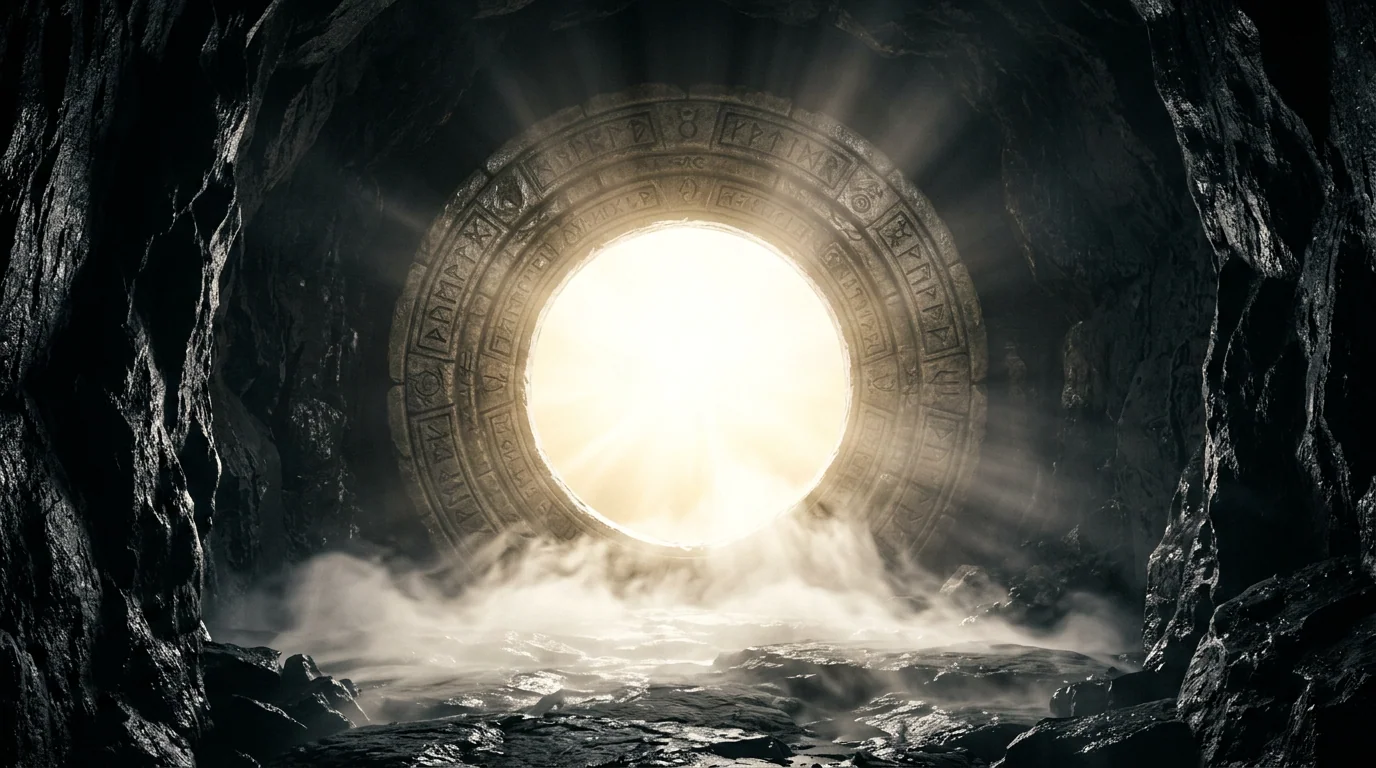
Where it leads
If this sounds familiar, the next step is simple.
The point is not to collect better language for the same patterns. The point is to identify what is running and decide what happens next.